
In modern world our economic system is called capitalism. It is a system where people invest money to produce goods or services and sell them in the market to earn profit. Karl Marx’s theory of capitalism remains one of the most influential and controversial frameworks for understanding economic and social relations. Although Marx developed his ideas in the 19th century during the rise of industrial capitalism, many of his observations about exploitation, inequality, and class struggle continue to resonate strongly in the modern age. In an era marked by globalization, digital economies, artificial intelligence, and widening wealth gaps, Marx’s critique of capitalism appears increasingly relevant.
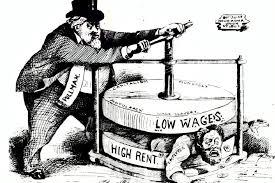
According to Marx, capitalism is an economic system based on private ownership of the means of production, where the bourgeoisie (capitalist class) owns factories, land, and capital, while the proletariat (working class) owns only its labor power. Workers are compelled to sell their labor in exchange for wages, but the value they produce exceeds the wages they receive. This excess value, known as surplus value, is appropriated by capitalists as profit.
Marx argued that capitalism is inherently exploitative because profit depends on extracting unpaid labor from workers. He also introduced the concept of alienation, where workers become estranged from the products of their labor, the process of work, their fellow workers, and ultimately from their own human potential. Furthermore, Marx believed capitalism is unstable by nature and prone to periodic crises due to overproduction, inequality, and declining profit rates.
In the modern age, capitalism has transformed but not disappeared. Industrial factories have been replaced or supplemented by multinational corporations, digital platforms, and global supply chains, yet the fundamental relations Marx described remain intact.
One major modern example is the gig economy. Companies like Uber, Foodpanda, and Amazon rely on flexible labor with minimal job security. Workers are often classified as “independent contractors,” denying them benefits such as healthcare, pensions, and paid leave. This reflects Marx’s idea of exploitation, where labor is used intensively while responsibility toward workers is minimized. And also in every sector of industries workers are oppressed in every way. They are not paid enough.
Recent global trends show extreme concentration of wealth. A small group of billionaires controls a disproportionate share of global resources, while millions struggle with stagnant wages and rising living costs. The post-pandemic economic recovery highlighted this divide: corporate profits and stock markets reached record highs, while inflation eroded the purchasing power of ordinary workers. This situation strongly supports Marx’s claim that capitalism accumulates wealth at one pole and poverty at the other.
Globalization has expanded capitalism across borders. Manufacturing is often outsourced to developing countries where labor is cheaper and regulations are weaker. Garment workers in South Asia, for instance, work long hours for low wages while multinational brands generate massive profits. This mirrors Marx’s theory on the global expansion of capitalism and exploitation beyond national boundaries.
Recent economic crises—including supply-chain disruptions, inflation shocks, and housing crises—reflect Marx’s idea that capitalism is prone to instability. The housing crisis in many countries shows how basic human needs are commodified, making shelter unaffordable for large sections of the population while real-estate investors profit.
Marx’s relevance in the modern age does not necessarily lie in advocating revolution, but in providing a critical lens to understand systemic inequality, labor exploitation, and power imbalance. His ideas influence modern debates on:
● minimum wage laws
● labor rights in the gig economy
● wealth taxation
● universal basic income
● corporate regulation
Social movements advocating workers’ rights, climate justice, and economic equality often echo Marxist concerns about unchecked capitalism.
In conclusion, Marx’s critique of capitalism remains highly relevant in the modern age. Although capitalism has adapted through technology and globalization, its core features—exploitation, inequality, alienation, and crisis—persist. Recent incidents such as mass layoffs, rising inequality, gig-worker struggles, and global labor exploitation validate many of Marx’s insights. While the world may not fully adopt Marx’s solutions, understanding his analysis helps us critically examine capitalism and imagine more just and humane economic alternatives.
Asaduzzaman
intern,content writing department
Requine BD
Comments (0)
Leave a Comment